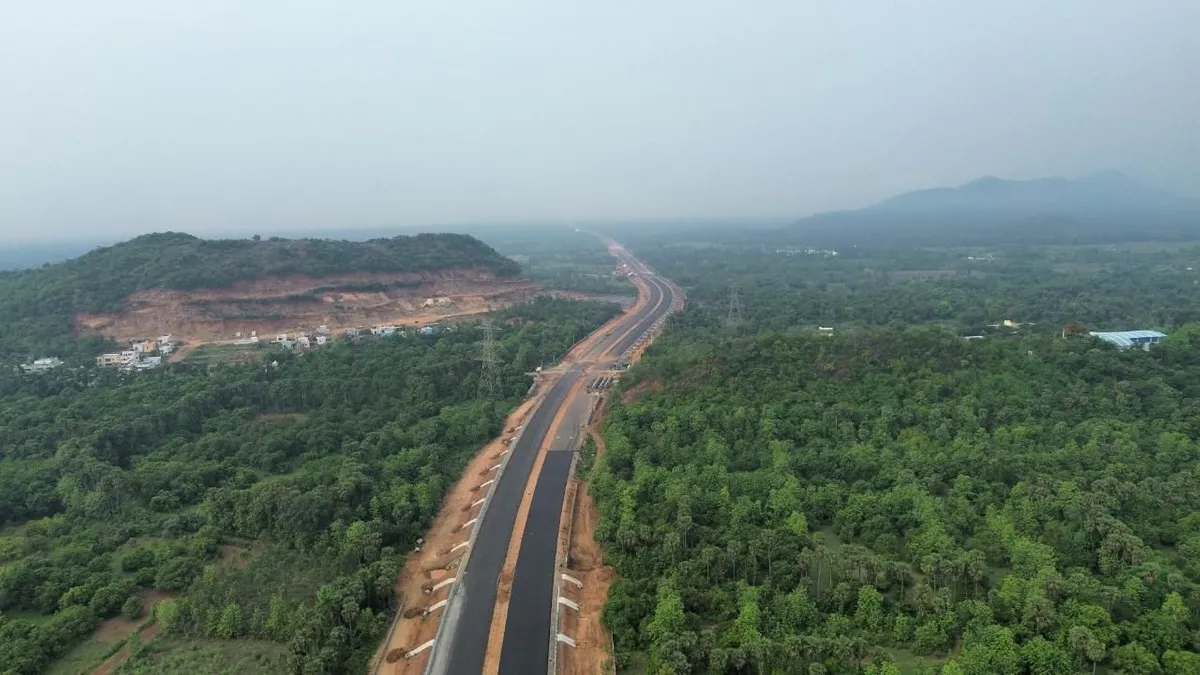
India’s infrastructure transformation is in full swing, and the development of national highways and expressways is at the heart of it. Under the Bharatmala Pariyojana and National Infrastructure Pipeline (NIP), several new corridors are being built to enhance connectivity, reduce travel time, and boost logistics efficiency. But beyond mobility, these mega projects are set to reshape India’s commercial real estate landscape — especially in logistics, warehousing, and industrial development.
Here’s a look at the top 5 upcoming national highways that are redefining connectivity and how they’re fuelling commercial property growth in India.
Table of Contents
1. Delhi–Amritsar–Katra Expressway
Length: ~670 km
States Covered: Delhi, Haryana, Punjab, Jammu & Kashmir
Expected Completion: 2025
The Delhi–Amritsar–Katra Expressway is a game-changer for northern India. This high-speed, access-controlled corridor will connect the national capital to the holy city of Katra via Punjab, drastically cutting travel time from over 12 hours to just about 6 hours.
Impact on Commercial Real Estate:
This expressway is expected to boost logistics and warehousing growth in Haryana and Punjab, particularly near Ambala, Ludhiana, and Gurdaspur. The corridor’s alignment through industrial towns will make it a prime zone for logistics parks, cold storage units, and manufacturing hubs. Additionally, the tourism-driven traffic to Amritsar and Katra will increase demand for hotels, retail centers, and roadside commercial development.

2. Ganga Expressway (Meerut–Prayagraj)
Length: ~594 km
State Covered: Uttar Pradesh
Expected Completion: 2025
The Ganga Expressway is Uttar Pradesh’s longest expressway, connecting western UP’s Meerut to Prayagraj in the east. It will bridge key economic regions across the state and link major industrial towns like Hapur, Rae Bareli, and Prayagraj.
Impact on Commercial Real Estate:
This expressway will transform Tier-2 and Tier-3 cities into commercial growth centers. Improved connectivity will drive industrial clustering and warehousing development, especially near Meerut and Lucknow. Land values along the expressway corridor have already started to rise, and developers are eyeing logistics hubs and industrial parks near interchange points. It will also spur ancillary development like fuel stations, logistics terminals, and roadside retail centers.
3. Raipur–Visakhapatnam Expressway
Length: ~464 km
States Covered: Chhattisgarh, Odisha, Andhra Pradesh
Expected Completion: 2026
Connecting central India to the eastern coast, the Raipur–Visakhapatnam Expressway is part of the East Coast Economic Corridor. It links key mining, industrial, and port regions, providing a faster route for freight and export activities through Vizag Port.
Impact on Commercial Real Estate:
This corridor has immense potential for industrial and logistics-based real estate growth. The improved freight movement between Chhattisgarh’s mineral zones and Visakhapatnam’s port will attract investments in industrial clusters, SEZs, and logistics parks. Towns like Koraput and Rajahmundry are likely to evolve into new logistics nodes. The project will also promote port-led industrialization under the Sagarmala initiative.
4. Pune–Bengaluru Expressway
Length: ~700 km
States Covered: Maharashtra, Karnataka
Expected Completion: 2028
The Pune–Bengaluru Expressway aims to connect two of India’s largest technology and industrial hubs. This 8-lane greenfield highway will significantly reduce travel time and improve the movement of goods between western and southern India.
Impact on Commercial Real Estate:
This corridor is expected to become one of India’s most lucrative commercial real estate belts. It will open up new logistics and industrial parks between Satara, Belagavi, and Tumakuru. The demand for warehousing, data centers, and manufacturing facilities is expected to grow exponentially due to the presence of major IT, automotive, and electronics industries in both Pune and Bengaluru. Moreover, commercial and mixed-use developments are likely to expand in mid-sized cities along the route, creating employment and business opportunities.
5. Varanasi–Kolkata Expressway
Length: ~710 km
States Covered: Uttar Pradesh, Bihar, Jharkhand, West Bengal
Expected Completion: 2027
The Varanasi–Kolkata Expressway will connect eastern India’s key economic centers and boost connectivity to the Kolkata port. The corridor will drastically cut travel time between eastern UP and Kolkata from 15 hours to under 7 hours.
Impact on Commercial Real Estate:
This expressway will be a catalyst for industrial and logistics development in eastern India. It will improve freight connectivity for manufacturing sectors in Bihar and Jharkhand while enhancing access to the Kolkata port for exports. Towns like Ranchi, Dhanbad, and Asansol are expected to emerge as real estate growth nodes. Additionally, logistics parks, industrial warehouses, and highway-adjacent commercial complexes are expected to flourish along this route.
How These Highways Are Powering Commercial Real Estate Growth
- Logistics Efficiency: Reduced transit times mean lower logistics costs, attracting warehousing and e-commerce investments.
- Industrial Expansion: Better connectivity supports industrial clusters and SEZs, leading to large-scale land acquisition and development.
- Urbanization of Tier-2 Cities: Improved access drives demand for offices, retail, and hospitality infrastructure in emerging cities.
- Appreciation in Land Values: Property prices near interchanges, toll plazas, and service areas are seeing steady appreciation.
- Infrastructure-Led Employment: The construction of highways itself spurs job creation and regional economic growth.
Conclusion
India’s upcoming national highways are not just transforming travel — they are unlocking new corridors of commercial growth. From warehousing in UP to industrial zones in Andhra Pradesh, these expressways are redefining India’s real estate geography. Investors and developers who identify early opportunities along these routes stand to gain significantly from the upcoming infrastructure-led boom.